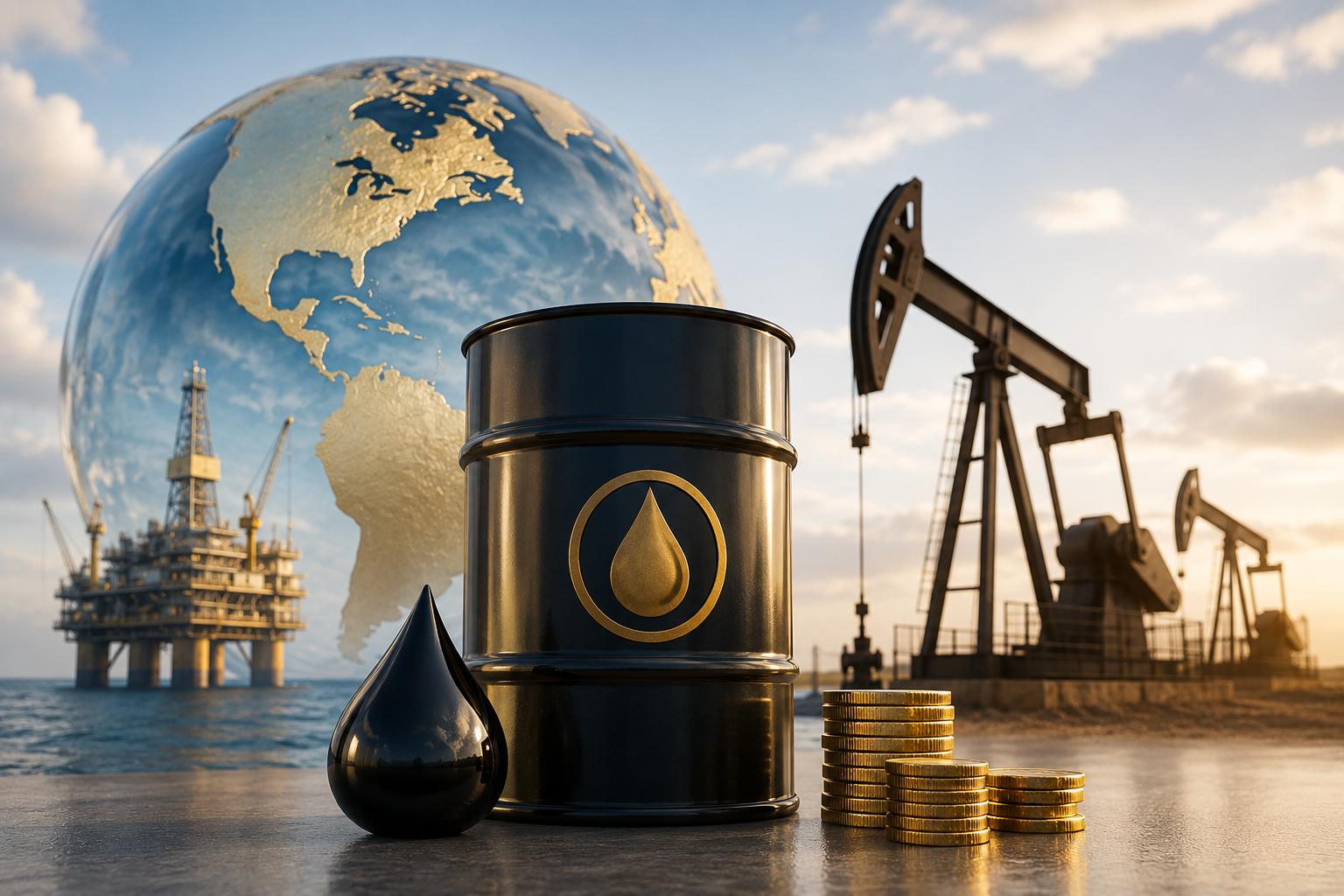
Every day, millions of barrels of oil move across the world — powering cars, factories, airplanes, and entire economies. But for decades, there was something almost every country needed before buying that oil: US dollars. This relationship between oil and the dollar became known as the “petrodollar system,” one of the most influential pillars of the modern global financial order. It not only strengthened the position of the US dollar as the world’s dominant currency, but also helped shape global trade, international politics, and financial markets for decades. To understand why the dollar became so powerful — and why many countries today are searching for alternatives — one must first understand the story of the petrodollar.
From Bretton Woods to the Petrodollar System
Before 1971, the global financial system operated under the Bretton Woods arrangement created after the Second World War. Under this system, the US dollar was directly linked to gold, meaning foreign governments could exchange dollars for gold at a fixed rate. At the same time, many other countries fixed the value of their currencies to the US dollar. Since the dollar itself was backed by gold, it became the center of global trade and finance. This system brought stability to international trade for many years, but over time growing US spending and rising global demand for dollars made it increasingly difficult for the United States to maintain enough gold reserves to support the system.
As more dollars circulated around the global economy, several countries started worrying that the United States no longer possessed enough gold reserves to support the growing supply of dollars. Nations such as France began exchanging their dollars for gold, putting increasing pressure on US gold reserves. Faced with this crisis, President Richard Nixon announced in August 1971 that the United States would temporarily suspend the convertibility of dollars into gold. However, what was initially presented as a temporary measure soon became permanent, effectively ending the Bretton Woods system and removing the dollar’s direct link to gold. With the collapse of the gold-backed monetary order, the United States began searching for a new foundation that could sustain global demand for the dollar and preserve its central role in international trade and finance.
Although the 1973 oil embargo — imposed by several Arab oil-producing nations during the Yom Kippur War in response to US support for Israel — had created serious tensions between the United States and the Arab world, both Washington and Riyadh still had strong long-term strategic interests in working together. For Saudi Arabia, the United States offered military protection, weapons, security cooperation, and access to Western financial markets. For the United States, Saudi Arabia was the world’s largest oil exporter and the most influential member of the Organization of the Petroleum Exporting Countries (OPEC), making it a critical partner in stabilizing global energy markets after the collapse of the Bretton Woods system.
How the Petrodollar Became a Pillar of the Global Financial Order
In June 1974, the two countries established the US–Saudi Joint Commission on Economic Cooperation. The arrangement strengthened economic, military, and strategic cooperation between both nations. Over time, Saudi Arabia increasingly priced and sold its oil exports primarily in US dollars, while also investing large portions of its growing oil revenues into US financial assets, particularly US Treasury bonds. In return, the United States expanded military support, arms sales, and security guarantees to the Saudi kingdom.
As Saudi Arabia’s influence within OPEC grew, other major oil exporters — including Kuwait, the United Arab Emirates, Qatar, and Venezuela — also increasingly adopted dollar-based oil trade. This shift did not happen through a single formal OPEC vote requiring all oil to be sold only in dollars. Rather, the system evolved gradually through Saudi Arabia’s dominant position within OPEC, America’s strategic partnerships with Gulf nations, and the growing importance of dollar-based global financial markets. Since countries around the world needed oil imports to run their economies, they also needed large reserves of US dollars to purchase energy. The sharp rise in oil prices following the 1973 oil crisis further increased global demand for dollars, helping strengthen the dollar’s position at the center of international trade and finance even after the collapse of the gold standard.
For several decades, particularly from the late 1970s to the early 2000s, the petrodollar system remained one of the strongest pillars of the global financial order. The US dollar dominated energy trade, central bank reserves, international banking, and global financial markets. Oil-exporting countries accumulated vast dollar reserves, while countries across the world continued holding dollars to secure energy imports and participate in global trade. The system helped strengthen American financial markets and reinforced the dollar’s position as the world’s dominant reserve currency.
Challenges to Dollar Dominance
Over time, however, concerns about the system gradually began to grow. As the global economy became increasingly dependent on the dollar, many countries felt that the United States possessed disproportionate influence over international finance and trade. Since global banking systems, payment networks, and energy markets were deeply connected to the dollar, Washington gained the ability to impose powerful financial sanctions and restrict access to the global financial system. Countries such as Iran and Russia increasingly viewed this dependence on the dollar as a strategic vulnerability, while China began exploring ways to expand the international use of its own currency.
The system also contributed to growing global economic imbalances. While oil-exporting nations accumulated massive dollar surpluses, many developing countries needed to constantly earn or borrow dollars to finance imports, repay debt, and stabilize their currencies. During periods of rising US interest rates or a strengthening dollar, several emerging economies faced financial stress, debt crises, and capital outflows. The 2008 global financial crisis further intensified these concerns, leading many governments and economists to question whether a global financial system so heavily dependent on a single currency could remain stable indefinitely.
In recent years, several developments have raised questions about the long-term future of the petrodollar system and the dominance of the US dollar in global trade. China, now the world’s second-largest economy and the world’s largest importer of crude oil, has increasingly promoted the international use of the yuan in trade and finance. Over the years, China displaced the United States as Saudi Arabia’s largest oil customer, further deepening economic ties between Beijing and Riyadh, with Saudi oil exports to China reaching nearly 1.65 million barrels per day by August 2025.
China has also taken concrete steps to build alternatives to the dollar-centered oil trading system. In March 2018, China launched yuan-denominated crude oil futures contracts through the Shanghai International Energy Exchange, marking the first major attempt to establish a large-scale oil pricing benchmark outside the traditional dollar system. The broader idea behind the initiative was to allow oil exporters to sell crude oil for yuan and then either use those yuan for Chinese goods and investments or convert them into gold through Shanghai’s gold markets. Over time, Saudi Arabia also became increasingly open to discussions around yuan settlement mechanisms, financial cooperation with Beijing, and participation in China-linked financial infrastructure.
The sanctions imposed on Russia following the Ukraine conflict further accelerated global discussions around de-dollarization. The freezing of Russian foreign exchange reserves and restrictions on access to dollar-based financial systems demonstrated how deeply global finance remained tied to the United States. For many countries, this became a warning about the risks of excessive dependence on the dollar-centered financial order. Several nations subsequently began diversifying reserves, increasing bilateral trade in local currencies, and exploring alternatives to traditional dollar-based payment networks, while central banks across the world significantly increased gold purchases, viewing gold as a neutral reserve asset outside the direct influence of any single government.
The Future of the Petrodollar in a Multipolar World
The petrodollar system remains one of the pillars of the modern global financial order, with the US dollar still dominating global trade, reserves, and energy markets. However, the rise of China, growing geopolitical tensions, increasing local currency trade, expanding gold purchases by central banks, and de-dollarization efforts by countries such as Russia and members of BRICS suggest that the global monetary system may gradually be moving toward greater diversification. While the dollar’s dominance remains strong, the future of the global financial system increasingly appears to be evolving toward a more multipolar order